Choosing reliable Bone Screws suppliers worldwide requires more than comparing prices or browsing attractive product catalogs. These implants must support demanding surgical procedures, where material quality, dimensional accuracy, and consistent performance matter greatly. A trustworthy supplier should provide clear specifications for titanium, stainless steel, or other approved materials. They should also explain thread design, diameter options, length ranges, and surface treatments in practical terms.
Experience often appears in small details. Can the supplier provide batch records, inspection reports, and sterilization information? Are samples packaged securely, with labels that remain readable during transport? A professional manufacturer should demonstrate quality systems, such as ISO 13485 certification, while meeting the regulatory requirements of each target market. Certifications alone are not enough. Their validity, scope, and issuing organization deserve careful review.
Communication is equally important. Reliable suppliers respond clearly about lead times, minimum order quantities, customization, and after-sales support. They should offer traceability from raw material selection to final inspection. Ask for references or documented experience with hospitals, distributors, or orthopedic device companies. Still, no supplier is perfect. Delays, unclear documents, or inconsistent samples may reveal weaknesses before a larger order is placed. That is why independent verification remains valuable.
This guide examines the practical factors behind supplier selection, including product quality, manufacturing capability, compliance, logistics, and commercial reliability. It also considers questions that purchasing teams sometimes overlook, such as complaint handling and continuity planning. The goal is not to identify the cheapest source. It is to find a dependable partner whose Bone Screws meet clinical expectations and market requirements consistently.
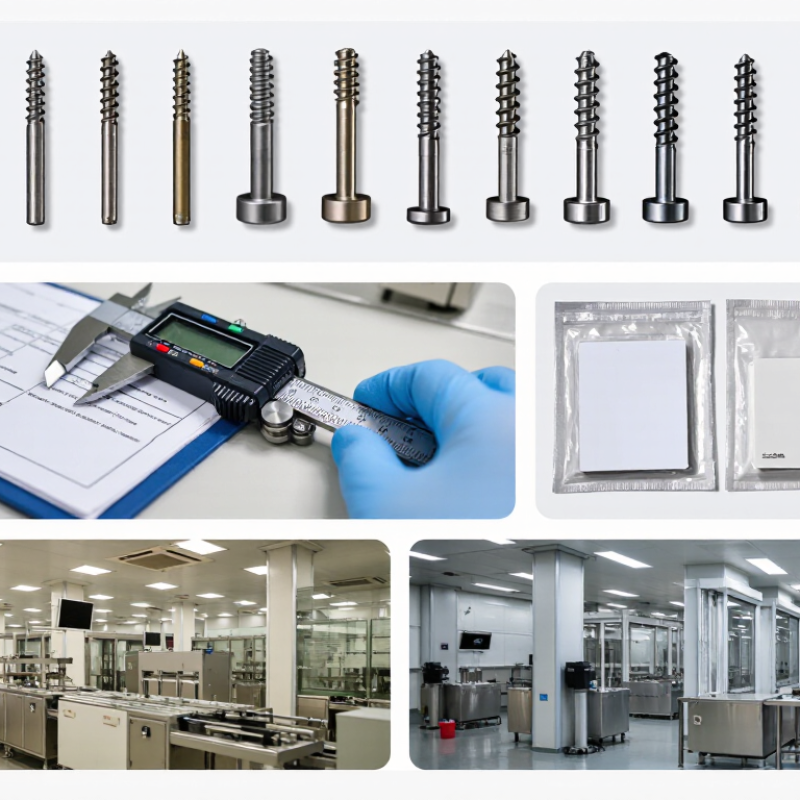
How to Choose Top Bone Screws Suppliers Worldwide? Understanding Bone Screw Types and Clinical Applications
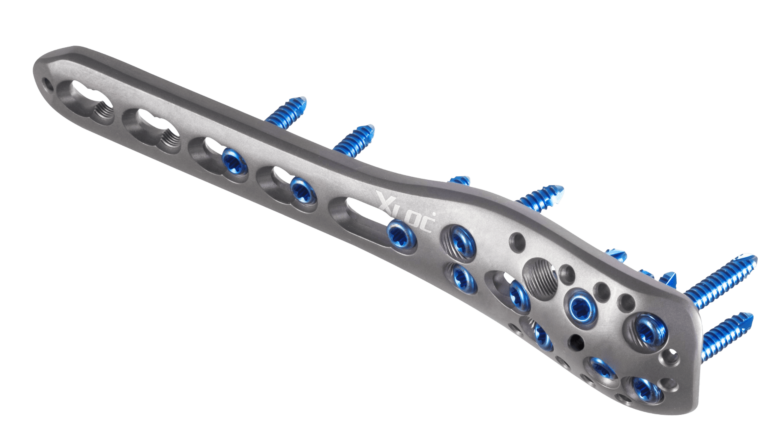
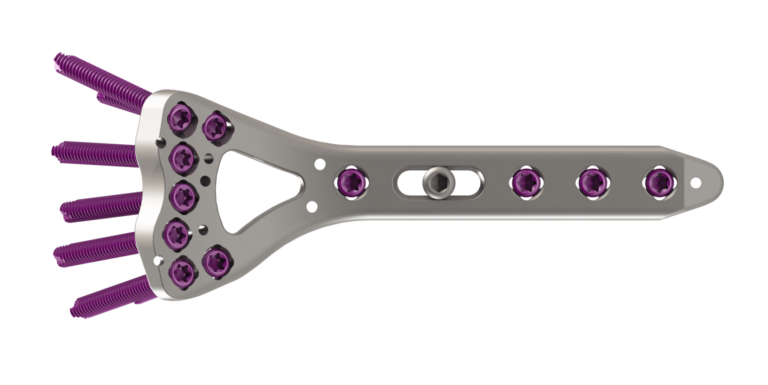
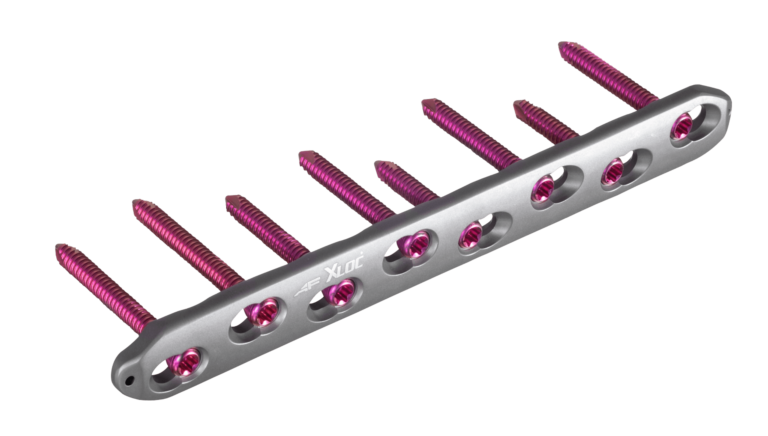
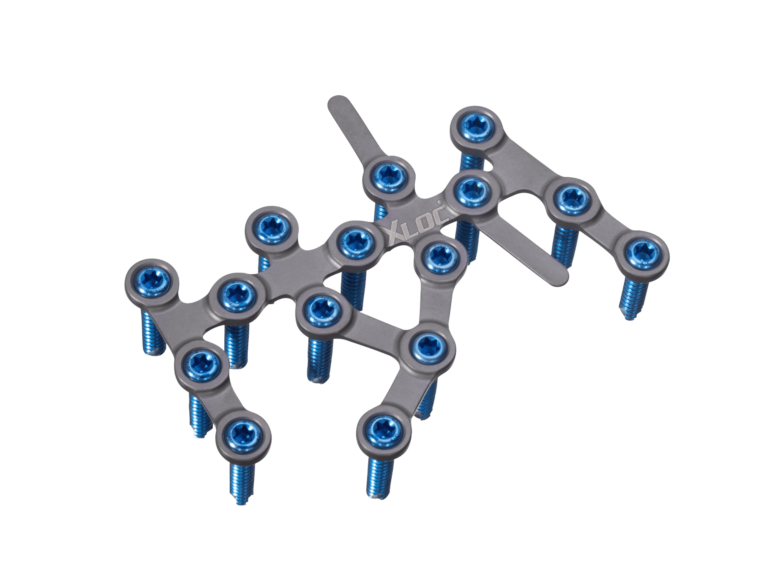
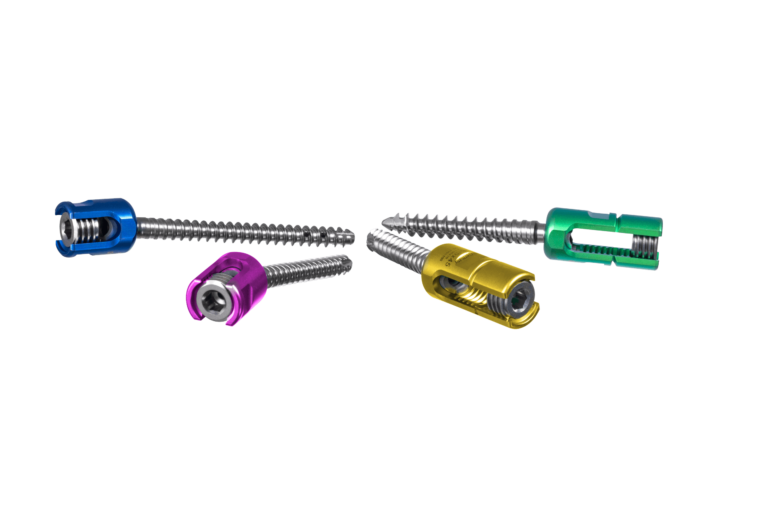
Choosing a bone screw supplier begins with clinical purpose, not catalog size. Cortical screws have fine threads and suit dense bone, such as a shaft fracture. Cancellous screws use deeper threads for softer metaphyseal or spinal bone. Locking screws connect with a plate and improve angular stability. Cannulated screws guide placement over a wire, often helping surgeons reach small or difficult fractures. Each design changes compression, fixation, and insertion technique.
Clinical evidence should guide supplier evaluation. A 2024 Grand View Research report valued the global orthopedic implants market at approximately USD 43.1 billion in 2023. This growth increases supplier choices, but market size does not prove product quality. Review material certificates, fatigue testing, sterilization controls, dimensional tolerances, and traceability records. FDA guidance for orthopedic metallic screws also emphasizes biocompatibility, mechanical performance, and manufacturing consistency. In practice, surgeons should compare thread geometry, driver engagement, and instrument ergonomics. A screw that looks ideal on paper may frustrate insertion during surgery.
Tips: Ask for evidence linked to the intended anatomy. Check whether the supplier supports multiple diameters, lengths, and emergency replacements. Confirm regulatory documentation for each destination country. Do not rely on price alone. I would also request samples for instrument handling, because small interface problems can become serious delays. No supplier is perfect; periodic audits and clinical feedback remain necessary.

Choosing top bone screw suppliers requires more than comparing prices or polished catalogs. Supplier qualifications should begin with a valid medical device quality system, such as ISO 13485 certification, supported by recent audit records. The manufacturer should provide material certificates for titanium or stainless steel, lot traceability, and documented control of critical dimensions. Ask who performs the testing. Independent laboratories can strengthen confidence, but internal testing is still useful when methods are validated.
Manufacturing standards deserve close attention. Inspect the entire process, from bar stock cutting to thread formation, cleaning, passivation, surface treatment, and sterile packaging. A capable facility uses calibrated measuring equipment and verifies thread pitch, head geometry, torque resistance, and fatigue performance. Relevant standards, including ASTM F543 where applicable, should guide mechanical testing. Risk management and biocompatibility evidence should match the intended use and destination market. Samples should be reviewed under magnification, not only accepted from drawings.
Traceability matters.
Request batch records, inspection plans, deviation reports, and corrective-action histories. A supplier that explains a past nonconformity clearly may be more reliable than one claiming a perfect record. No manufacturer is flawless. The important question is whether problems are detected early and corrected permanently. Evaluate production capacity, change-control procedures, complaint handling, and supply continuity through an on-site or independent audit. Experienced evaluators also compare sample quality with routine production, because first articles can receive unusual attention. Supplier approval should depend on evidence, not confident promises.
| Qualification Dimension | Recognized Requirement or Standard | Objective Evidence to Request | Practical Supplier-Selection Benchmark |
|---|---|---|---|
| Quality management system | ISO 13485 certification for the manufacture of medical devices, with a scope covering orthopedic implants or relevant sterile/non-sterile products. | Current certificate, certification scope, issuing conformity-assessment body, audit status, and corrective-action records. | The certificate scope should directly include the proposed bone-screw product category and manufacturing activities. |
| Regulatory compliance | Applicable regulatory controls, such as the U.S. medical-device quality requirements or Regulation (EU) 2017/745 for products placed on the European market. | Device classification rationale, technical documentation index, declaration or authorization documents, and market-specific registration information. | The supplier must clearly identify which legal manufacturer, contract manufacturer, and regulatory representative is responsible for each market. |
| Risk management | ISO 14971-based risk management covering design, manufacturing, packaging, sterilization, transport, and clinical use. | Risk-management plan, hazard analysis, risk-control records, benefit-risk evaluation, and linkage to verification and validation tests. | Risks such as breakage, loosening, migration, corrosion, thread damage, and incorrect torque should be specifically assessed. |
| Material traceability | Implant-grade materials should conform to the specified material standard, such as ASTM F136 for titanium alloy, ASTM F138 for stainless steel, or ASTM F90 for cobalt-chromium alloy, where applicable. | Material certificates, heat or lot numbers, chemical composition, mechanical properties, supplier chain records, and incoming-inspection results. | Every finished screw should be traceable to its raw-material heat, production batch, inspection records, and release decision. |
| Design verification | Testing should address the intended screw design, dimensions, thread form, drive recess, cannulation, and bone-fixation application. | Controlled drawings, tolerance specifications, design-review records, verification protocols, and signed test reports. | The supplier should demonstrate that the tested configuration is identical to the proposed production configuration. |
| Mechanical performance | ASTM F543 provides recognized methods for metallic medical bone screws, including insertion, torque, axial pullout, and torsional performance testing. | Test method, sample size, fixture details, conditioning, acceptance criteria, raw data, failure mode, and laboratory qualification. | Results should support the intended size range and worst-case screw geometry rather than relying only on a single nominal size. |
| Dimensional and visual inspection | Critical dimensions should be controlled using calibrated equipment and approved inspection methods. | Inspection plans, calibrated gauge records, optical or coordinate-measuring reports, surface-finish results, and nonconformance records. | Controls should cover major diameter, minor diameter, pitch, length, head geometry, drive recess, cannulation, burrs, sharp edges, and surface defects. |
| Biocompatibility | ISO 10993-based biological evaluation should be performed according to the device’s material, tissue contact, contact duration, and processing state. | Biological-evaluation plan, material characterization, toxicological assessment, test reports, and justification for any omitted tests. | Evidence should cover the final finished product, including cleaning, passivation, coating, sterilization, and packaging effects where applicable. |
| Surface treatment and cleanliness | Cleaning, passivation, electropolishing, coating, or other treatments must be validated and controlled for the specified material and device use. | Process-validation reports, surface-chemistry or residue results, particulate testing, bath-control records, and acceptance limits. | The supplier should define limits for visible contamination, residues, particles, discoloration, corrosion, and coating defects. |
| Sterilization capability | Applicable sterilization processes should be validated under standards such as ISO 11135 for ethylene oxide, ISO 11137 for radiation, or ISO 17665 for moist heat. | Sterilization validation, routine-cycle records, biological-indicator or dosimetry controls, residual testing where applicable, and release criteria. | The supplier should distinguish between sterile supplied products and products supplied non-sterile for hospital or customer sterilization. |
| Packaging and shelf life | ISO 11607 provides requirements for packaging systems intended for terminally sterilized medical devices. | Packaging specifications, seal-strength and integrity testing, accelerated-aging protocol, real-time aging plan, and transport simulation results. | Shelf-life claims should be supported by documented aging and package-integrity evidence for the final packaging configuration. |
| Process validation | Special processes whose results cannot be fully verified by later inspection should be validated, monitored, and revalidated when required. | Validation protocols and reports for machining, thread forming, heat treatment, passivation, coating, cleaning, sterilization, and packaging. | Validation must identify equipment, parameters, worst-case conditions, acceptance criteria, and change-control requirements. |
| Supplier and subcontractor control | Critical subcontracted activities and material suppliers should be evaluated and controlled within the quality system. | Approved-supplier list, supplier audits, quality agreements, incoming-inspection records, and subcontractor change notifications. | No critical process or material change should occur without documented notification, assessment, and customer approval when required. |
| Production capacity and continuity | Capacity should be demonstrated using controlled production equipment, trained personnel, preventive maintenance, and business-continuity planning. | Capacity plan, equipment list, maintenance records, staffing plan, lead-time history, disaster-recovery plan, and supply-risk assessment. | The supplier should show a credible plan for maintaining supply during equipment failure, raw-material shortage, or regulatory disruption. |
| Batch release and documentation | Each production lot should be reviewed against approved specifications before release. | Device history records, certificates of conformity, inspection results, sterilization records, deviation reports, and release authorization. | Documentation should be complete, legible, signed or electronically approved, and retrievable for the required retention period. |
| Post-market support | Complaint handling, vigilance, corrective and preventive action, recall control, and field-safety communication should be documented. | Complaint procedure, response-time targets, CAPA examples, recall procedure, trend reports, and escalation contacts. | The supplier should provide defined response times and full lot traceability for investigations and potential field actions. |
Note: Applicable standards and regulatory requirements depend on the screw material, design, intended use, sterilization status, and target market. Qualification should be based on current editions and verified scope.
Choosing a bone screw supplier requires more than comparing prices or catalog images. Product quality begins with consistent materials, accurate dimensions, and controlled manufacturing. Ask for material certificates, inspection records, and evidence of batch traceability. A reliable supplier should explain how screws are cleaned, packaged, and protected from contamination.
Safety documentation deserves close attention. Review biological evaluation data, sterilization validation, and packaging integrity tests. For titanium or stainless-steel screws, check corrosion resistance and mechanical performance under relevant conditions. Manufacturing controls should align with recognized systems such as ISO 13485. However, a certificate alone proves little. Its scope, validity, and issuing body require careful verification.
Regulatory compliance differs across markets. Confirm whether the supplier supports the technical documentation required in your target countries. This may include risk management files, clinical evidence, post-market surveillance, and product identification records. Request samples from regular production, not specially prepared units. Inspect thread sharpness, surface finish, and driver fit under magnification. Small defects can matter.
Clear communication also signals reliability. Suppliers should answer questions with dated records, not vague assurances. Ask how they handle complaints, recalls, and design changes. Some evaluations focus too heavily on documents and overlook actual handling conditions. That is a weakness worth correcting. A supplier may appear compliant while response times remain uncertain. Test this before a contract, using a detailed technical inquiry and a realistic deadline.
Price is important, but the lowest quote can hide significant costs. Compare unit prices with tooling fees, minimum order quantities, inspection charges, and freight terms. Ask for a detailed quotation, not a single figure. Experienced buyers also calculate the cost of rejected batches, delayed shipments, and replacement inventory. A supplier should explain how material, coating, packaging, and order volume affect pricing. Cheap quotes can be expensive.
Customization requires more than changing screw length. Confirm available materials, thread profiles, head designs, diameters, and surface finishes. Request engineering drawings, tolerance data, prototype samples, and validation records. The supplier should review your specifications before production begins. Clear change-control procedures are essential. Small details matter. However, custom work may increase lead times and tooling expenses. I would question any supplier promising complex modifications without discussing testing or production limits.
Global supply capability depends on evidence, not confident promises. Review manufacturing capacity, batch traceability, quality records, and realistic lead-time data. Check whether the supplier can provide consistent documentation for different markets. Ask about backup production, raw-material availability, inspection equipment, and shipment planning. A reliable partner should communicate delays early and provide corrective-action reports. Independent audits can reveal weaknesses that brochures never mention. No supplier is perfect. The more useful question is how openly they address failures and improve their process.
How to Choose Top Bone Screws Suppliers Worldwide?
Verifying supplier reliability starts with a focused audit, not a sales presentation. I review the facility, quality system, and production records. The factory should show controlled machining areas, calibrated instruments, and clear material identification. Records should match reality. Ask for evidence.
A useful audit follows each screw from incoming metal to final release. Check supplier qualification, lot traceability, inspection plans, and nonconformance records. Review sterilization controls when sterile products are supplied. Examine corrective actions, not only certificates. A valid certificate with the wrong scope proves little. Confirm its issuing body, dates, and covered activities through reliable documentation.
References add practical insight that audits may miss. Request contacts from hospitals, distributors, or established medical-device purchasers. Ask whether deliveries stayed consistent during shortages. Explore response times, complaint handling, and document accuracy. Avoid accepting only selected references. Speak with at least two contacts when possible. Ask specific questions.
I also compare samples against approved drawings and technical specifications. Small differences in thread form or surface finish can affect performance. Independent testing may reveal issues hidden during a factory visit. My process is not perfect. A short audit cannot predict every future failure. Supplier finances, staff turnover, and subcontracting can change quickly. Recheck critical suppliers periodically, and document every unresolved concern before approval.
This recommended evaluation model prioritizes the evidence most relevant to bone screw supplier reliability: quality-system audits, regulatory compliance, material and process traceability, product testing, and verified customer references. The framework aligns with recognized medical-device requirements and standards such as ISO 13485, ISO 14971, ISO 10993, and ASTM F543. The percentages are practical assessment weights, not market-share statistics.