Orthopedic Implants Manufacturer

What Is the Most Common Type of Medical Implant?

When people ask about the most common type of medical implant, dental implants often enter the conversation. They replace missing tooth roots and support crowns, bridges, or dentures. Their small titanium posts sit inside the jawbone, where bone gradually grows around the surface. It is a precise process, not a simple replacement.

However, the answer depends on how researchers define “most common.” Some sources count annual procedures, while others count implanted devices, patients, or long-term use. By procedure volume, intraocular lenses used during cataract surgery may compete closely with dental implants. Orthopedic implants, including hip and knee replacements, also represent a major clinical category. Reliable comparisons require current registry data, surgical reports, and clear definitions.

The article will examine these differences through an evidence-based lens. It will explain why dental implants are frequently described as the most common Medical Implants, while acknowledging uncertainty between healthcare systems. It will also compare materials, surgical goals, recovery expectations, and common risks. Real clinical decisions depend on anatomy, age, medical history, and the treating specialist’s assessment. There is no universal answer.

That matters. A popular device is not automatically the best choice for every patient. Dental implants can improve chewing and oral function, yet healing may be slower for people with diabetes, gum disease, or limited bone volume. Readers should treat general information as context, not personal medical advice. A qualified clinician remains essential. Even this explanation has limits, because implant statistics change as technologies and reporting standards develop.
What Is the Most Common Type of Medical Implant?

What Medical Implants Are and How They Are Classified

What Is the Most Common Type of Medical Implant?

Medical implants are devices placed inside or on the body to restore function, support healing, or replace damaged structures. Dental implants are often described as the most common type, especially in everyday healthcare discussions. However, the answer changes by country, hospital records, and counting method. Some sources count individual devices, while others count procedures.

Medical implants can be classified in several practical ways. By purpose, they may replace tissue, deliver therapy, support body structures, or monitor health conditions. By location, they include dental, orthopedic, cardiovascular, neurological, and soft-tissue implants. Hip and knee replacements support movement, while cardiac devices help regulate heart rhythm. Implants may also be temporary or permanent. Their materials can include metals, ceramics, polymers, or combinations of these materials. This classification is useful, but it is not perfect. One implant can fit several categories at once.

Tips: Ask what the implant is designed to do, how long it may remain, and what follow-up care is needed. Request clear information about material, risks, imaging compatibility, and warning signs. A qualified medical professional should explain whether an implant suits your condition. Do not rely on popularity alone. Your anatomy, medical history, lifestyle, and recovery goals matter more. Even experienced clinicians must sometimes revise their assessment after imaging or unexpected healing.
What Is the Most Common Type of Medical Implant?

What Medical Implants Are and How They Are Classified

Medical implants are devices placed inside the body to replace, support, monitor, or restore the function of biological structures. They can be classified by their location, purpose, materials, and expected duration of use. Common categories include dental implants, intraocular lenses, orthopedic implants, and cardiovascular implants.

The chart compares approximate annual procedure volumes in the United States. Dental implant placement appears among the most frequent implant procedures, while intraocular lenses are implanted during most cataract surgeries. Estimates represent procedures rather than unique patients and may vary by year and source.

Sources: American College of Prosthodontists, American Academy of Ophthalmology, American Academy of Orthopaedic Surgeons, and American Heart Association. Values are rounded estimates for educational comparison.

Why Dental Implants Are Often Considered the Most Common Type

Dental implants are often described as the most common medical implant, but the claim needs careful wording. “Medical implant” includes devices such as joint replacements, cardiac stents, intraocular lenses, and contraceptive implants. There is no single global database that ranks every implant by annual volume. Still, dental implants have remarkable reach.

The American Academy of Implant Dentistry reports that about 5 million dental implants are placed annually in the United States. NIDCR analysis of NHANES data found implants in 5.7% of adults aged 20 and older, rising to 17.9% among adults aged 65 and older. These figures show routine adoption, especially after tooth loss. A small titanium fixture sits inside the jawbone, then supports an abutment and a visible crown. It can restore chewing, speech, and facial support. However, “most common” may change with the definition used. That uncertainty deserves attention.

Tips: Ask for a complete medical and dental history review before treatment. Smoking, uncontrolled diabetes, gum disease, and some medications can affect healing. Request information about implant material, imaging, maintenance, and expected lifespan. WHO’s Global Oral Health Status Report estimates that oral diseases affect nearly 3.5 billion people worldwide, so prevention still matters. An implant is not a substitute for daily cleaning. The details matter. Regular professional reviews can detect inflammation around the implant, loose components, or bone loss before symptoms become obvious.

How Dental Implants Are Designed and Placed

Dental implants are often described as tooth replacements, but their design is more precise. An implant replaces the tooth root, while an abutment connects it to a crown. Together, these parts restore chewing function and support the surrounding tissues. The American Academy of Implant Dentistry estimates that about five million dental implants are placed in the United States each year. That figure reflects demand, not guaranteed success.

Planning starts with a clinical examination, digital scans, and three-dimensional imaging. Dentists assess bone volume, gum health, bite forces, and nearby nerves. A narrow implant may suit limited space, while a wider design may provide stronger support. Most implants use biocompatible titanium or ceramic materials. Their surfaces are engineered to encourage osseointegration, when bone gradually bonds with the implant. Healing takes time. Usually several months.

Placement is typically performed under local anaesthesia through a small opening in the gum. The clinician prepares a channel, inserts the implant, and closes the tissue around it. Some cases allow immediate crown placement, but delayed loading is often safer when bone stability is uncertain. The World Health Organization reported that oral diseases affect nearly 3.5 billion people worldwide, showing why prevention still matters after treatment. An implant can feel natural, yet it cannot decay like a tooth. It can still collect plaque and develop inflammation. That detail is easy to miss. Long-term maintenance depends on brushing, professional cleaning, and regular reviews. Even well-planned treatment is not perfectly predictable; smoking, diabetes, bone quality, and inconsistent hygiene can alter healing.

The Main Uses and Benefits of Dental Implants

What Is the Most Common Type of Medical Implant?

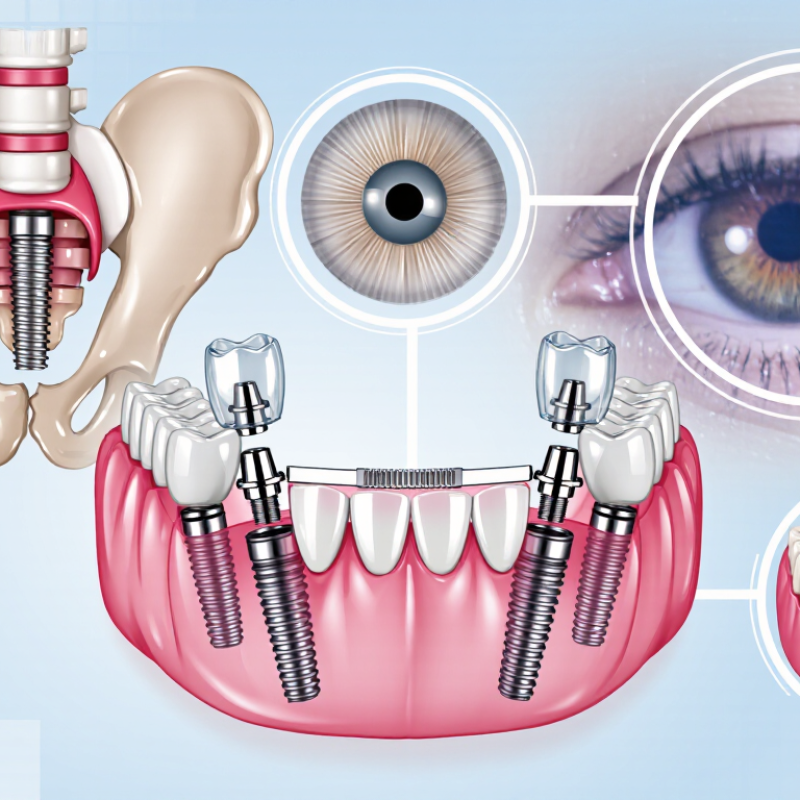
Dental implants are among the most commonly used medical implants. They replace missing tooth roots with small posts placed inside the jawbone. Most posts use biocompatible titanium, while some patients may consider ceramic options. After placement, the bone gradually bonds with the implant through osseointegration. This process can take several months.

The Main Uses and Benefits of Dental Implants

Dental implants support individual crowns, bridges, or removable dentures. They can improve chewing, speech, and daily comfort after tooth loss. Unlike traditional bridges, an implant does not usually require reshaping neighboring healthy teeth. It also helps maintain stimulation in the jawbone, which may reduce bone shrinkage over time. Patients often notice a more natural feeling when eating crunchy foods or speaking.

Results depend on bone volume, gum health, oral hygiene, and general medical conditions. A dentist may request scans before treatment. These images show nerve locations and available bone. Healing is not always smooth. Infection, poor integration, or discomfort can occur, especially when aftercare is ignored. Smoking can also impair healing. Implants are durable, but they are not maintenance-free. Daily brushing, cleaning between teeth, and professional examinations remain important. I have found that realistic expectations matter as much as appearance. A carefully planned implant may restore function, yet it cannot perfectly copy a natural tooth.

Risks, Maintenance, and Alternatives to Dental Implants

Dental implants are among the most frequently placed medical implants. The American Academy of Implant Dentistry estimates that about five million implants are placed annually in the United States. An implant replaces a missing tooth root with a biocompatible post, usually supporting a crown. Long-term results are generally strong. A systematic review in Clinical Oral Implants Research reported approximately 95% survival after ten years. However, survival is not the same as complete health.

Risks include infection, nerve irritation, sinus complications, bone loss, and failed integration. Peri-implantitis is especially important. A systematic review in the Journal of Clinical Periodontology estimated that it affects roughly one in five patients, although definitions and study populations differ. That uncertainty matters. Regular maintenance can reduce avoidable problems. Patients should brush twice daily, clean between implants, avoid tobacco, and attend individualized professional reviews, often every three to six months. Diabetes control also deserves attention. Even careful patients can develop inflammation.

A dental implant is not the only reasonable choice. Fixed bridges can replace a tooth without surgery, but they require preparing neighboring teeth. Removable partial dentures cost less initially and are easier to adjust, though they may feel less stable. In selected cases, leaving a gap may be acceptable, depending on function, appearance, and oral health. The American College of Prosthodontists emphasizes individualized treatment planning. Evidence is useful, but it cannot predict every patient’s outcome.

What Is the Most Common Type of Medical Implant? - Risks, Maintenance, and Alternatives to Dental Implants

Implant Type Typical Purpose Common Materials Key Benefits Important Risks Typical Maintenance Common Alternatives
Dental implant Replaces the root of a missing tooth and supports a crown, bridge, or denture. Usually titanium or a ceramic material; the visible crown is commonly ceramic-based. Helps restore chewing function, supports appearance, and may reduce bone loss at the implant site. Infection around the implant, failure of bone integration, nerve or sinus injury, loosening, and bone loss. Daily brushing and interdental cleaning, professional cleanings, bite checks, and regular dental examinations. Removable partial denture, complete denture, fixed bridge, or leaving the space untreated when clinically appropriate.
Total or partial joint replacement Replaces damaged hip, knee, shoulder, or other joint surfaces to reduce pain and improve movement. Metal alloys, highly durable plastics, ceramics, or combinations of these materials. Often provides substantial pain relief and improved mobility after rehabilitation. Infection, blood clots, dislocation, fracture, implant wear, loosening, and the possibility of revision surgery. Follow rehabilitation instructions, maintain healthy weight and muscle strength, attend follow-up visits, and seek care for new pain or swelling. Physical therapy, medication, injections, braces, activity modification, or joint-preserving surgery.
Intraocular lens Replaces the eye’s natural lens during cataract surgery or corrects selected focusing problems. Foldable medical-grade polymers or other biocompatible optical materials. Can improve vision and reduce dependence on thick corrective lenses after cataract removal. Infection, inflammation, pressure changes, retinal complications, glare, and clouding behind the lens. Use prescribed drops, avoid rubbing the eye during recovery, attend eye examinations, and report sudden vision changes. Glasses, contact lenses, or continued monitoring when surgery is not necessary.
Cardiac pacemaker Provides electrical stimulation when the heart rhythm is too slow or irregular. A sealed electronic generator with insulated leads made from biocompatible materials. Can prevent symptoms caused by slow heart rate, such as fainting, fatigue, or dizziness. Lead displacement, infection, bleeding, device malfunction, and complications related to the implantation procedure. Scheduled device checks, monitoring battery status, carrying device identification, and asking clinicians about equipment that may interfere with the device. Medication, treatment of the underlying rhythm disorder, or observation in carefully selected cases.
Breast implant Reconstructs breast volume after surgery or changes breast size and shape. A silicone elastomer shell filled with saline or silicone gel. Provides a predictable change in breast volume and can support reconstructive goals. Capsular contracture, rupture or deflation, pain, asymmetry, infection, and possible revision surgery. Routine clinical follow-up, awareness of changes in shape or firmness, and imaging when recommended for silicone-filled implants. External prosthesis, fat grafting, tissue-based reconstruction, or no implant-based reconstruction.
Spinal fixation implant Stabilizes selected spinal segments after trauma, deformity, or degenerative disease. Titanium alloys, stainless steel, cobalt-based alloys, or specialized polymers. May improve spinal stability and help maintain alignment while bone fusion develops. Infection, nerve injury, non-union, hardware loosening or breakage, and persistent or recurrent pain. Gradual activity progression, prescribed exercises, follow-up imaging, and avoiding nicotine because it can impair bone healing. Physical therapy, medication, injections, activity changes, or selected motion-preserving procedures.
Key takeaway: Dental implants are among the most widely used elective restorative implants, but there is no single global ranking for the “most common” medical implant because implant frequency varies by country, age group, healthcare system, and whether procedures or individual implanted devices are counted.
Important note: Implant suitability, expected lifespan, surveillance, and alternatives depend on individual anatomy, medical history, treatment goals, and clinician assessment. This table is for general education and does not replace professional medical or dental advice.